Category Archives: Concerts

From Iceland with love

While Kraftwerk were hitting up Paradiso for the opening night of of their epic 8-gig retrospective, a more humble event was taking place at Tolhuistuin, the vibrant new venue for arts and culture located in Amsterdam North, just opposite the city’s imposing railway station.

The line-up consisted of two lesser-known bands from Iceland, which has proved to be a consistently good source for creative new artists in constant search of diverse soundscapes.

Not just a pretty face

In 2011 Icelandic songwriter Sóley released We Sink, her first full length album, followed by Krómantík in 2014, which featured solely piano music. Having been noted for their “dark surrealism”, Sóley’s songs are characterized by strangely beautiful melodic lines and her subtle, delicate singing.

Her slight clumsiness/nervousness on stage only made her performance more attractive (at some point she asked the audience ”are you from Amsterdam?”), while her dream-like compositions (which included tunes from We Sink but also several new songs) quickly captivated the crowd and created the perfect setting for the act that was about to follow.

Low profile, high standards

Low Roar came to being after singer-songwriter Ryan Karazija moved from California to Reykjavík following the break-up of his old band Audrye Sessions. In Iceland, he recorded Low Roar’s self-titled debut album, which was followed by 0 (2014), a truly magnificent record that combines elegantly Karazija’s folk-style guitar playing and ethereal vocal lines with electronic loops and post-rock elements.

Low Roar’s silent dynamism and low profile combined with their focused, dedicated playing made for a great performance at Tolhuistuin; taking the music to various directions from reserved lyricism and atmospheric ballads to electronic and dance breaks, Low Roar offered the crowd a live show of the highest level.
 

This slideshow requires JavaScript.

Haarlem’s musical treasure

The cathedral

Just a 15-minute train ride from boisterous and cosmopolitan Amsterdam lies the charming city of Haarlem (which incidentally gave its name to Nieuw Haarlem in the northern part of Manhattan Island back in 1658). Its skyline has been dominated by the imposing Grote Kerk (or Sint-Bavokerk) cathedral, a Protestant church situated on the city’s central market square.

The organ

The organ situated inside the church (known as the Christiaan Müller organ) is considered as one of the world’s most important organs. Built by the Amsterdam organ builder Christian Müller between 1735 and 1738, it was the largest organ in the world by the time of its completion with 60 voices and 32-feet pedal-towers.

Such has been the instrument’s reputation that even Herman Melville mentioned it in his classic novel Moby-Dick (1851) when describing the inside of a whale’s mouth:

“Seeing all these colonnades of bone so methodically ranged about, would you not think you were inside of the great Haarlem organ, and gazing upon its thousand pipes”

Many important musicians and composers have played the Christiaan Müller organ over the centuries including Mendelssohn, Händel, as well as the 10-year old Mozart who visited Haarlem in 1766 in order to play the renowned organ.

The concerts

Having been modified a number of times over the course of the past centuries, the organ underwent a major renovation between 1959 and 1961. Today regular organ concerts together with several special events are being held in the Grote Kerk in order to give the opportunity to the public to listen to the unique sound of this celebrated organ.

Although I have visited Haarlem in the past, it was only recently that I had the chance to attend one of these concerts. Listening to the sound of this spectacular instrument filling up the vast space of the cathedral’s interior was quite a special experience. And it was only made possible through the masterful  playing of Haarlem’s city ​​organists Jos van der Kooy and Anton Pauw, who treated the audience to an excellent program including works by J.S. Bach, Felix Mendelssohn, Max Reger, and Hendrik Andriessen.

Max Richter and Daniel Hope in concert (Paradiso, Amsterdam)

From baroque to the present

It is always refreshing to hear a piece of classic stature in a way you would have never imagined possible. Such is the case with Vivaldi Recomposed: The Four Seasons, Max Richter’s fascinating reworking of Vivaldi’s timeless masterpiece (which has been through several creative transformations through the years).

Richter’s imaginative and highly idiosyncratic re-composition of The Four Seasons is indeed a unique achievement. Having infused Vivaldi’s work with postmodern and minimalist elements, Richter has at the same time managed to remain faithful to the music’s innermost essence producing a result of the highest standards, both aesthetically and technically.

Four Seasons in Paradise

On September 10, I was one of the fortunate Amsterdamers who had the opportunity to experience a live performance of the recomposed Four Seasons (for the first time in The Netherlands) by Max Richter, British violinist Daniel Hope and L’arte del mondo orchestra at Paradiso’s magnificent Grote Zaal.

This slideshow requires JavaScript.

Given Paradiso’s tradition in bringing together the old the new, one could hardly think of a better venue for the occasion. Following an impressive opening by the vigorous Francesco Tristano and Alice Sara Ott piano duo, Richter and Hope gave a truly exhilarating performance which produced a highly enthusiastic response from the audience.

And rightly so: it is not every day that one gets to enjoy live the combined magic of Vivaldi’s captivating music and Richter’s innovative vision coming to life under the imposing windows of Amsterdam’s most celebrated music venue.

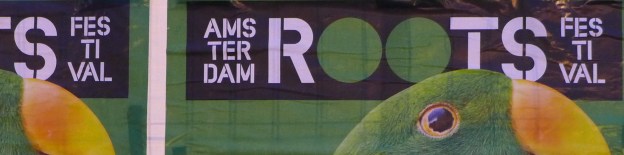
Roots Open Air (Java Island, Amsterdam)

A festival with strong roots

Throughout its long and interesting history, Roots Festival has been introducing Amsterdam crowds to exciting new sounds and great artists, many of whom (e.g. Fela Kuti, Salif Keita, Manu Dibangowho) were already hugely popular in their home countries before becoming part of the everyday vocabulary among the circles of local music aficionados.

New edition, new location

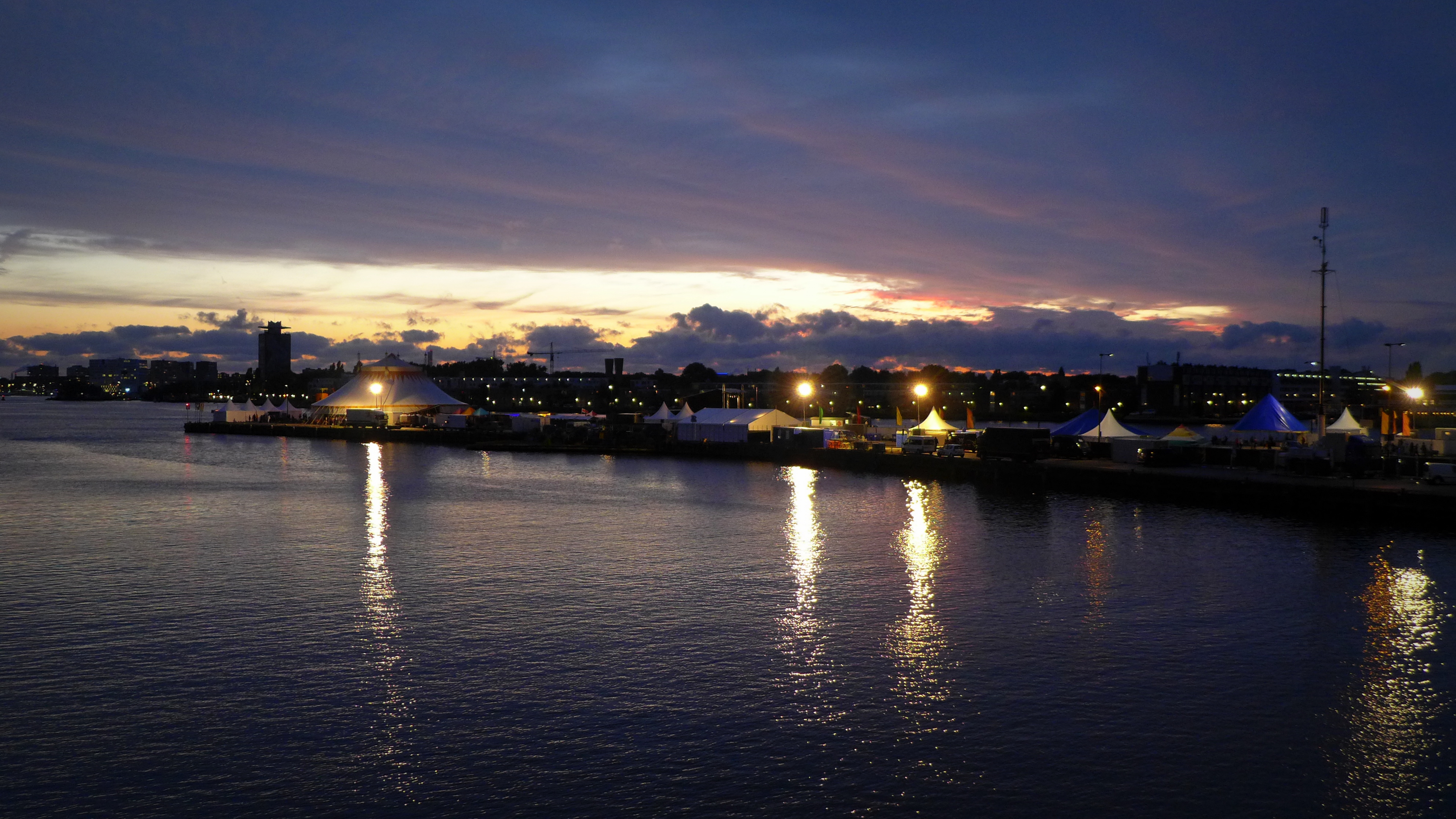
This year’s edition marked a big change as Roots Open Air, the outdoor event which concluded the festival, moved for the first time from Oosterpark to a new location: the Java Island in Amsterdam’s Eastern Docklands area. Thus, On 6 July, Java Island’s Kop van Java became host to a unique blend of musical styles ranging from non-Western pop and Afro-Caribbean to funk, psychedelic and electronic music.

Roots Festival (Kop van Java, Amsterdam)

Roots Open Air 2014 (Java Island, Amsterdam)

Singing in the rain

Despite the rain showers that persisted throughout most of the evening, the diversity and quality of music on offer were more than enough to make up for the lousy weather.

I first had the chance to watch Garifuna Collective, who presented the soulful melodies and powerful rhythms of their native region in Central America. After the beautiful tunes of the Garifuna people, the volume was raised for the Colombian Bomba Estereo and their dynamic ‘psychedelic cumbia’ sound.

Still, the highlight of this year’s festival was surely the closing performance by Youssou N’Dour. The Senegalese singer and composer performed both new and old songs (including 7 Seconds), as well as covers from such classics as Bob Marley’s Redemption Song.

This slideshow requires JavaScript.

The best conclusion to the event (and certainly one of the day’s extra-musical highlights) was coming out of the main stage after the rain was over to watch an incredible evening skyline…

Richard Thompson in concert (Paradiso, Amsterdam)

The multi-talented mr. Thompson

British guitarist and songwriter Richard Thompson started his long recording career in 1967 as a member of Fairport Convention. His exceptional guitar technique and songwriting skills soon earned him a highly acclaimed status among peer folk-rock musicians, and many of his songs have been subsequently covered by a wide range of artists (including Elvis Costello and David Gilmour).

Mostly known for his skilled acoustic playing, Thompson has deployed several styles over the years. He often plays bass notes using a pick between his thumb and first finger, adding the melody and extra ornamentation by plucking the treble strings with the rest of his fingers. Sometimes he also makes use of a thumb-pick, as in the motorcycle ballad 1952 Vincent Black Lightning.

A ‘folky’ power trio

His latest album Electric was released earlier this year, peaking at number 16 on the UK Album Chart (the highest charting album of his career so far). I recently had the chance to see Thompson perform live with his “electric trio” in Amsterdam, in one of the stops of his ongoing tour on both sides of the Atlantic.

It was interesting to watch such a revered acoustic player going electric, trying to emulate the sound of good old power trios like Cream or The Jimi Hendrix Experience. Towards the closing of the concert, however, Thompson made this telling confession: “You know, we are too folky to be a real power trio.”

With that, he grabbed his acoustic guitar and offered the audience a couple of excellent acoustic solo performances. He came back with his trio for a final tune: a magnificent, electrifying version of Hey Joe à la Hendrix.

Whether folky, acoustic, or electric, one thing about Richard Thompson is certain: He surely remains a guitar powerhouse and a great inspiration for players worldwide.