Category Archives: Various

Great moments of Greek(lish) rock, pt.1: The Psychedelic Apocalypse

Here is wisdom. Let him who has understanding calculate the number of the beast, for it is the number of a man: His number is 666.

(Rev. 13:18)

Although 60s-70s Greek rock music was of no particular interest to the international public (not least because of obvious linguistic reasons), there were however some notable exceptions. Perhaps the most well-known Greek English-singing band of the era is Aphrodite’s Child (named after a song by Dick Campbell), formed in 1967 by Vangelis Papathanassiou (keyboards), Demis Roussos (bass guitar and vocals), Loukas Sideras (drums and vocals), and Anargyros “Silver” Koulouris (guitar).

Their first single Rain and Tears (1968), an adaptation of Pachelbel’s famous Canon in D, was recorded while the band was based in France. It met with considerable international success and went on to sell more than one million copies.

The band’s undisputed masterpiece, however, would be 666 (The Apocalypse of John, 13/18). Recorded between late 1970 and early 1971, 666 is considered a landmark in the history of progressive rock. An album of astonishing musical diversity, it was a powerful combination of original concept and highly innovative sound.

666 was largely Vangelis’s own musical project, as is testified by the advanced (for the time) use of synthesizers/keyboards, sound effects, and overall production. Musically, the album contains several remarkable moments (e.g. Aegean Sea, Break, The Four Horsemen), however it works best when seen as an uninterrupted, thematically-unified musical composition.

Aphrodite's Child: Best ofIts musical merits notwithstanding, the release of 666 was not unproblematic. The record company did not approve of the record’s length and largely experimental style, to say nothing about its subject matter. To top it off, the track “∞” featured Greek actress Irene Papas singing frantically “I was, I am, I am to come” in an aural simulation of female orgasm.

When the double album was eventually released in 1972 (one year after it had been completed), its blood-red cover (where the number 666 is prominently displayed) would also stir some controversy. This, however, only helped to boost the album’s sales, which exceeded 20 million copies worldwide.

Despite being the band’s greatest achievement, 666 would also be their swan song. Relationships between band members grew increasingly worse during the album’s recording, and by the time the record was out Aphrodite’s Child had already split. Both Roussos and Vangelis would follow successful solo careers, the latter achieving worldwide fame as a composer of electronic music (including the soundtracks for Blade Runner and Chariots of Fire).

Even though the children of Aphrodite had chosen to go their separate ways, they had managed to give birth (albeit a troubled one) to their psychedelic masterpiece – an everlasting monument of Greek rock music and one of the defining albums of the 70s progressive and experimental scenes.

125 years of sublime sound

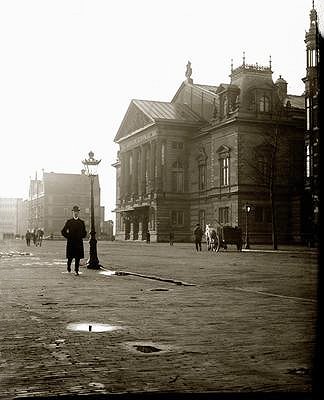
On April 11, 1888 an orchestra of 120 musicians together with a chorus of 500 singers performed works of Wagner, Handel, Bach, and Beethoven in a new building in what was then called Nieuwer-Amstel. It was the beginning of the story of the Concertgebouw, Amsterdam’s famous and much beloved concert hall. And no doubt it’s been a long, fascinating story…

This year, the city’s oldest and grandest classical music venue celebrates its 125th birthday. Due to its remarkable acoustics, the Concertgebouw is considered one of the finest concert halls worldwide – and for good reason. Anyone who’s been fortunate enough to attend a concert in the magnificent Grote Zaal (‘Big Hall’) is familiar with the unique aura and enchanting atmosphere of the venue.

The Concertgebouw in 1902

The Concertgebouw in 1902

Throughout its long -and at times turbulent- history, the Concertgebouw has been host to an astonishing string of world-renowned composers who came along to present premieres of their works, such as Gustav Mahler, Sergei Prokofiev, Richard Strauss, Maurice Ravel and Béla Bartók.

But by no means is the list confined to the classical genre alone. Legendary figures from the world of popular music have also performed in Amsterdam’s historic venue. Duke Ellington, Aretha Franklin, Ella Fitzgerald, Shirley Bassey have all been guests of the Concertgebouw, along with rock giants such as Led Zeppelin and Pink Floyd.

Personally, I always regard a visit to the Concertgebouw as a kind of pilgrimage to one of the world’s unique music temples. Along with Vienna’s Musikverein or London’s Royal Albert Hall, it ranks as one of the most beautiful concert halls I have ever visited. But more importantly, it is a place where music can be experienced most fully and intensely, and thus I think the word ‘temple’ should not ring too much out of place.

In all my years in Amsterdam, I’ve had the chance to see some truly amazing performances at the Concertgebouw. I was there for a solo piano recital by Daniel Barenboim for the celebration of Chopin’s bicentennial. I saw Earl Wild performing shortly after his ninetieth birthday, attended recitals by some of the world’s greatest pianists (Evgeny Kissin, Alfred Brendel and Grigory Sokolov to name a few) and saw celebrities like Chick Corea, Yo-Yo Ma and Lang Lang showcasing their extraordinary skills and virtuosity on stage.

One of the most-visited concert halls worldwide, the Concertgebouw seems to have not only a glorious past but also a promising future. And I look forward to being part of the experiences it yet has to offer.

Live, loud and underground

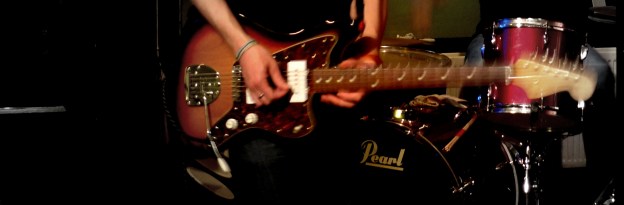
I have to admit I don’t go to concerts as often as I used to (or would like to, for that matter). But lately I’ve been trying to get back in touch with Amsterdam’s vibrant music scene. I’m not talking big names or venues here, but mostly intimate gigs of lesser-known local bands.

One such case is the blues/garage rock duo The Shady Greys. As both their name and songs suggest, their ‘grey’ sound lies somewhere in between The Black Keys and The White Stripes, marked by fuzzy guitar riffs and the use of the cajón.

I recently had the chance to meet and jam with them during a late night session in one of the city’s blues bars. In that same session I also bumped into a musician friend I hadn’t seen in quite some time. I was glad to hear that he’s busy doing gigs and playing guitar for The Crowns, an Amsterdam-based rock group built on the “foundations of Dutch liberty & freedom.”

More on the psychedelic side of things, The Full Wonka is another local band whose atmospheric, experimental sound produces a hypnotizing effect. Watching them live and listening to their tunes brings to mind bands like The Brian Jonestown Massacre and The Velvet Underground.

Only a fragment of Amsterdam’s alternative rock music scene, these bands nevertheless capture most of its essential qualities: energy, enthusiasm, spontaneity and -perhaps most importantly- genuine expression of feeling coupled with lots of fun.

The fine art of album covers

These last few days, after reading the news about Storm Thorgerson’s passing away (the man responsible for several iconic record sleeves), I have been pondering on the very special relationship between music and cover art.

Aesthetically speaking, I have always regarded the artwork of an album at least as important as the music it contains. Great album covers often attracted my attention and curiosity while I would browse through records in some store, resulting in my acquaintance with many exciting and undiscovered soundscapes.

In fact, the cover’s artwork has often been my very first impression of a music album. It was through their intriguing, mystifying covers that I was first introduced to many classic records such as Houses of the Holy, Wish You Were Here or Dark Side of the Moon, all designed by Storm Thorgerson.

Another work by Thorgerson I have always admired is his cover design for Pink Floyd’s A Momentary Lapse of Reason. The cover shows 800 hospital beds, arranged in a river-like form on a beachfront location (which is Saunton Sands in Devonshire, UK). The image took about two weeks to create and won the photographer Robert Dowling a gold award at the Association of Photographers Awards.

The association between sound and image can be crucial for an album’s thematic coherence, conceptual effect and aesthetic value. It is hard to imagine someone listening to The Wall, Sticky Fingers or The Velvet Underground & Nico without simultaneously thinking of their accompanying cover art.

Some of the best album covers, as in Thorgerson’s work, have their origins in progressive rock. One of my all-time favorites is the artwork for King Crimson’s In the Court of the Crimson King, which so powerfully captures the atmosphere of impending paroxysm and paranoia described in the album’s opening track 21st Century Schizoid Man (Barry Godber, who painted the album cover, died in 1970 of a heart attack shortly after the album’s release).

King Crimson, ‘In the Court of the Crimson King’ (1969)

Another artist I have always admired is Roger Dean, whose designs have been on album covers by bands such as Babe Ruth, Budgie, Uriah Heep and Gentle Giant.

Gentle Giant, ‘Octopus’ (1972)

A truly imaginative and original artist, Dean is most well known for the amazing fantasy landscapes he has produced for the progressive rock bands Asia and Yes.

Yes, ‘Tales from Topographic Oceans’ (1974)

Examples like the collaboration between Pink Floyd and Storm Thorgerson or Yes and Roger Dean illustrate how cover art can play an integral part in shaping a band’s identity. Masterful works of art in their own right, albums covers can both complement and enhance a band’s artistic image.

This art form, however, has been traditionally associated with vinyl, where the cover design has the necessary breathing space in order to create the desired aesthetic effect. In the era of digital music and massive downloading, it is doubtful whether cover art for music albums will continue to have the same prominence and importance. I, for one, sincerely hope it will.

The timeless charm of record stores

Although I grew up in a house with a fair number of vinyl records lying around, I belong to the compact disc generation. The first music album I ever bought was in CD format, and so were the countless others that followed over the years. That is, until fairly recently, when I finally got around to buying my own record player.

I only started getting seriously involved with vinyl around 2008, after already having moved to rainy Amsterdam from my sunny hometown, Athens. It was not the change of climate, however, that did the trick. It was the city’s amazing vinyl market and the enchanting, vintage black discs with the cool artwork that kept catching my eye even though going back to vinyl in our digital age seemed to be a clearly retrogressive move, like reverting to agriculture from industrialization (which actually doesn’t sound that bad I have to confess).

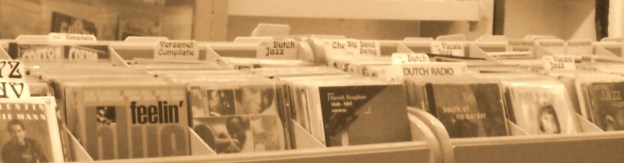
Getting to know Amsterdam’s record stores has been an ongoing adventure, and a most pleasurable one. I’m mostly talking about independent record stores, with their special charm and character, like the fictional Championship Vinyl in Nick Hornby’s High Fidelity.

Inside ‘Concerto’, one of Amsterdam’s oldest record stores

Fortunately, such stores are still amongst us, and record hunting around there as well as the city’s flea markets has been a favorite pastime ever since I got my record player (if you want to know more about the unique world of Amsterdam’s record stores, check out my survey about the top vinyl spots in town).

The unique culture of indie record stores is celebrated through Record Store Day. Originally conceived in 2007, it is now celebrated the third Saturday every April (it was officially kicked off by Metallica at Rasputin Music in San Francisco on April 19, 2008).

On Record Store Day (April 20 this year) the participating independently-owned record stores organize various events and festivities, while special vinyl/CD releases and live performances from hundreds of artists also take place (you can check here to see if there is a participating store near you).

In the words of Sir Paul McCartney: “There’s nothing as glamorous to me as a record store. When I recently played Amoeba in LA, I realized what fantastic memories such a collection of music brings back when you see it all in one place. I hope that these kinds of stores will be there for us all for many years to come.”