Tag Archives: Amsterdam

Richard Thompson in concert (Paradiso, Amsterdam)

The multi-talented mr. Thompson

British guitarist and songwriter Richard Thompson started his long recording career in 1967 as a member of Fairport Convention. His exceptional guitar technique and songwriting skills soon earned him a highly acclaimed status among peer folk-rock musicians, and many of his songs have been subsequently covered by a wide range of artists (including Elvis Costello and David Gilmour).

Mostly known for his skilled acoustic playing, Thompson has deployed several styles over the years. He often plays bass notes using a pick between his thumb and first finger, adding the melody and extra ornamentation by plucking the treble strings with the rest of his fingers. Sometimes he also makes use of a thumb-pick, as in the motorcycle ballad 1952 Vincent Black Lightning.

A ‘folky’ power trio

His latest album Electric was released earlier this year, peaking at number 16 on the UK Album Chart (the highest charting album of his career so far). I recently had the chance to see Thompson perform live with his “electric trio” in Amsterdam, in one of the stops of his ongoing tour on both sides of the Atlantic.

It was interesting to watch such a revered acoustic player going electric, trying to emulate the sound of good old power trios like Cream or The Jimi Hendrix Experience. Towards the closing of the concert, however, Thompson made this telling confession: “You know, we are too folky to be a real power trio.”

With that, he grabbed his acoustic guitar and offered the audience a couple of excellent acoustic solo performances. He came back with his trio for a final tune: a magnificent, electrifying version of Hey Joe à la Hendrix.

Whether folky, acoustic, or electric, one thing about Richard Thompson is certain: He surely remains a guitar powerhouse and a great inspiration for players worldwide.

White bicycles: Music making in the 1960s

A short history of the sixties

“The sixties began in the summer of 1956, ended in October of 1973 and peaked just before dawn on 1 July, 1967 during a set by Tomorrow at the UFO Club in London.” 

For anyone interested in the cultural and music developments of the 1960s, Joe Boyd’s fascinating memoir White Bicycles – Making Music in the 1960s is a must read (the book title refers to the 1967 song My White Bicycle by Tomorrow, which was about Amsterdam’s community bicycle program). Full of incredible anecdotes as well as precious insights, it highlights less-known aspects of the 1960s music business and its protagonists.

Boyd was a key figure himself. As a tour manager he organized concerts for artists like Muddy Waters, Stan Getz and Sister Rosetta Tharpe. He was also responsible for the sound at the 1965 Newport Folk Festival, when Bob Dylan confronted the audience with his controversial electric set. Furthermore, he went on to become a successful record producer, working with bands such as Fairport Convention and Pink Floyd.

From blues to folk and beyond

In his book, Boyd describes the blues boom of the sixties and its increasing appeal to white audiences, which marked “the end of the natural life of the form.” As he puts it: “No white person in America in 1964 – with the exception of me and my friends, of course – knew who John Lee Hooker was.”

He goes on to chronicle landmark events such as the Newport Festivals between 1963 and 1965, which saw the rise of Bob Dylan as Woody Guthrie’s heir and his subsequent turn from political song to a “decadent, self-absorbed, brilliant internal life.” Boyd is even willing to provide the exact time slot of this major shift: “Anyone wishing to portray the history of the sixties as a journey from idealism to hedonism could place the hinge at around 9:30 on the night of 25 July, 1965.”

Revolution and disillusionment

Moving on to the cultural scene amidst swinging London, Boyd recalls: “In 1966 the world was changing by the week. (…) Soho that year was like the steppes in AD350, with Visigoths, Ostrogoths, Vandals and Huns queuing up to pillage, destabilize and eventually take over the Roman Empire.” There is no doubt for the prominent role of the English capital: “New York would never have moulded Hendrix’s genius into as powerful a pop persona as London did.”

Boyd describes the music of the early Pink Floyd as “the soundtrack for the Underground” and likens the choruses of Syd Barrett’s songs to “fertile planets in a void of spaced-out improvisation.” For him, one of the most enduring images of the whole era was that of “the four Floyds bent together over their instruments in concentration while purple and turquoise bubbles of light play over them.”

http://youtu.be/-TNlXSIpzP4

As for the unprecedented commercial success that followed in the post-Barrett era: “Pink Floyd’s success is difficult to analyse or explain. What they brought with them from Cambridge was all their own; London in 1967 just happened to fall in love with it first.”

Parallel to the music-driven narrative in White Bicycles, Boyd also illustrates vividly the optimism, idealism and progressive tendencies of the time: “Despite differing notions of what the revolution was about, an atmosphere of agape was pervasive in 1967: people were fundamentally quite nice to each other. (…) What London witnessed in the spring of ’67 was more than an endorsement of a new musical style, it was a mass immersion in the sub-culture that gave rise to it.”

Interestingly, he is also careful to demonstrate the other, darker side of this eventful period: “Beneath the surface, the progressive sixties hid all manner of unpleasantness: sexism, reaction, racism and factionalism. (…) The agape spirit of ’67 evaporated in the heat of ugly drugs, violence, commercialism and police pressure. In Amsterdam, people started sealing and repainting the white bicycles.”

In conclusion, Boyd’s White Bicycles makes for some fascinating reading. Next to the impressive parade of (more or less) famous musicians featured in its pages, the author also refers in passing to a variety of topics from Cuban music to the downsides of digital recording. Personally, I found extremely valuable the abundance of references to artists and recordings I had never heard of before, and enjoyed greatly reading about the background stories to some of the best music ever made (as in the chapters on Nick Drake, which are particularly rewarding).

125 years of sublime sound

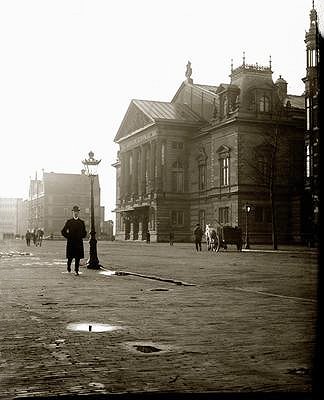
On April 11, 1888 an orchestra of 120 musicians together with a chorus of 500 singers performed works of Wagner, Handel, Bach, and Beethoven in a new building in what was then called Nieuwer-Amstel. It was the beginning of the story of the Concertgebouw, Amsterdam’s famous and much beloved concert hall. And no doubt it’s been a long, fascinating story…

This year, the city’s oldest and grandest classical music venue celebrates its 125th birthday. Due to its remarkable acoustics, the Concertgebouw is considered one of the finest concert halls worldwide – and for good reason. Anyone who’s been fortunate enough to attend a concert in the magnificent Grote Zaal (‘Big Hall’) is familiar with the unique aura and enchanting atmosphere of the venue.

The Concertgebouw in 1902

The Concertgebouw in 1902

Throughout its long -and at times turbulent- history, the Concertgebouw has been host to an astonishing string of world-renowned composers who came along to present premieres of their works, such as Gustav Mahler, Sergei Prokofiev, Richard Strauss, Maurice Ravel and Béla Bartók.

But by no means is the list confined to the classical genre alone. Legendary figures from the world of popular music have also performed in Amsterdam’s historic venue. Duke Ellington, Aretha Franklin, Ella Fitzgerald, Shirley Bassey have all been guests of the Concertgebouw, along with rock giants such as Led Zeppelin and Pink Floyd.

Personally, I always regard a visit to the Concertgebouw as a kind of pilgrimage to one of the world’s unique music temples. Along with Vienna’s Musikverein or London’s Royal Albert Hall, it ranks as one of the most beautiful concert halls I have ever visited. But more importantly, it is a place where music can be experienced most fully and intensely, and thus I think the word ‘temple’ should not ring too much out of place.

In all my years in Amsterdam, I’ve had the chance to see some truly amazing performances at the Concertgebouw. I was there for a solo piano recital by Daniel Barenboim for the celebration of Chopin’s bicentennial. I saw Earl Wild performing shortly after his ninetieth birthday, attended recitals by some of the world’s greatest pianists (Evgeny Kissin, Alfred Brendel and Grigory Sokolov to name a few) and saw celebrities like Chick Corea, Yo-Yo Ma and Lang Lang showcasing their extraordinary skills and virtuosity on stage.

One of the most-visited concert halls worldwide, the Concertgebouw seems to have not only a glorious past but also a promising future. And I look forward to being part of the experiences it yet has to offer.

Films from the underground: A conversation with Jeffrey Babcock (pt.2)

-click here to read pt.1-

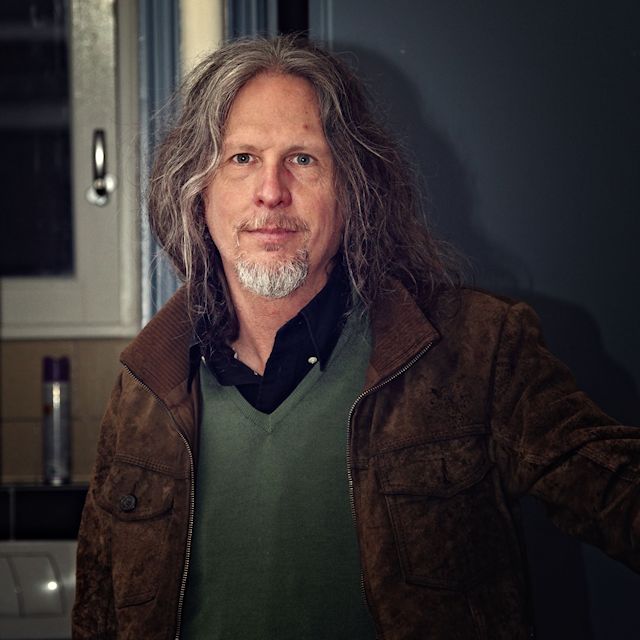
Jeffrey Babcok Photo: Mony Art http://www.monyart.com

Jeffrey Babcock
Photo: Mony Art http://www.monyart.com

The social factor and people getting together from different backgrounds is an important element in your screenings. But how is watching a movie different than reading a book or listening to a record, which can also be a very personal experience?

I feel the world is becoming too fragmented, we are becoming more and more isolated. People nowadays even have jobs that they can do from their computers staying at home. So everyone ends up staying in their little apartments with their home cinema or their flat-screen TV. And so we’re becoming more and more isolated, and desperately disconnected from each other.

So it really comes down to human interaction.

Everything I do, even cinemas and film, is not really just about film. I’m not a nerd in that sense. Films are only a step to reflect on our lives and what we are doing with our lives. If it doesn’t do that, then it becomes worthless to me. I’m not the kind of guy that downloads tons of movies just to have them all there. I think social interaction is necessary, more today than ever before, and that’s why cinema today is also necessary.

Watching a film together with other people makes it a living thing. You see a film with one audience and then with a different audience, and it can change incredibly according to how people react. I’ve shown movies that I’ve seen 25 times, and I’ll still be there with my audience watching the film. I would never abandon the audience and just go to the bar and grab a beer or something. I’m always there because it’s a live experience.

Do you also tend to watch the audience during a screening?

Yes, I do that sometimes. Like when you’re caught up in a movie and you suddenly step back and look at the audience, and you see all these beautiful faces transfixed on the screen…

Also, since many of my screenings are free, there’s a lot of people coming that normally would never go to watch a European art film. So then you get people that are used to acting in a certain way, because they’re used to going to Pathé to watch blockbusters and James Bond films, and they’re carrying over their behaviour from those cinemas because they don’t know any other way to relate to a movie. I see a lot of that going on but I regard it as a necessary evil, and it’s a good thing in a way. Because these people are the ones who need most to see such films, and otherwise they would never watch them.

If for example I’m showing a classic 1955 Italian film, there will be people who’ve never seen anything like it before and they will be surprised. And of course you’re likely to get some strange reactions, because they’re not used to respecting a movie, they’re only used to spectacles and blockbusters and treating movies like trash. My hope is that if these people come to the screenings frequently enough, they will then start to behave more respectfully. So I want them to come, so that there is diversity in the audience. I could choose to show film noir only, and then I would get a hardcore fan group and there would always be the same people, so the whole thing would be dead. So this is one way to keep things alive.

I always try to keep the movies at a very low price or for free. In my newsletter I also mention sometimes that if someone can’t afford to pay, they can come find me before the film and I’ll get them a ticket. I cannot necessarily let people in for free, because the places where we charge ticket also have to pay rent, so I don’t want to take money away from the cinemas either. Therefore I cannot just say “come in for free”, but I can pay for their ticket instead. I think people should be free to experiment, and with my cinema you never know what you’re going to get yourself into. So you should not be paying an expensive ticket like you do for Pathé and all the big cinemas.

And looking at the ticket prices in most cinemas, it seems that going to the movies is becoming a kind of luxury.

Yes, and the end result of this is that if someone wants to watch a movie and cannot afford to go see it on the big screen, they will download it and watch it at home by themselves. Once again, this is pushing people back into their private experiences, whereas what I’m trying to do is open people up into the social experience. And of course not everyone in Amsterdam can fit in my screenings, but there could be fifty small cinemas throughout the city doing the same thing, offering an incredible diversity of choice and being dirt cheap too.

At the same time, distributors currently couldn’t care less if a film is commercial or uncommercial; they will always ask the same standard price, which has led to a ridiculous situation. I see Amsterdam as an international city, and I think we should have an international cinema. It doesn’t have to be a big organization; anyone can basically turn any bar or space into a cinema and start their own initiative.

Is there a specific film or director of particular importance to you personally?

Not really. I mean, in general I am so open and I love diversity so much that I can’t get locked on to certain films or directors. The first movie I remember seeing is ‘The Hunchback of Notre Dame’ with Charles Laughton. I remember seeing this as a kid and I wasn’t supposed to stay up that late, so I sneaked out my bedroom door and I was watching this and it was fantastic: Esmeralda, Quasimodo, him on the top of the Notre Dame… And this reminds me that it can be a special experience when you have to struggle a bit or overcome some kind of obstacle in order to watch a film. It is the same thing, in a way, with some of my cinemas; not all of them are necessarily very comfortable.

And then there was Godard’s ‘Weekend’, a film he made in 1967. It’s a film I watched as a teenager when I was going to high school in a small town. On the weekends, and sometimes even during the week, we would go to the capital city (Madison, Wisconsin) and there were these students in a campus showing all these European films – because in America you don’t get to see European films. It was there that I saw my first Antonioni, my first Truffaut and John Cassavetes… So I was learning about cinema and when I would go back to my high school I would try and talk to other kids about it, but they only knew ‘Saturday Night Fever’ or ‘Star Wars’, there was such a divide going on…

So I also watched Godard’s ‘Weekend’ during that period and I was a young kid. And I was so pissed off after that movie, I was thinking “how could that fucker do that?”, you know, “how could anybody be so arrogant?” I was really upset about this film. But then, exactly because I was so upset about it, it got stuck in the back of my mind, I didn’t forget about it. And this changed slowly, and I started appreciating the movie and understanding where the film was coming from. So regardless of whether someone really hates or likes a film, I think it’s very important when it invokes a strong reaction. Because the kind of neutral mentality “seen the movie, had my pop corn, now go home” never has the possibility of changing a person’s life.

Are you thinking of including more titles by female directors in the future?

I think the ratio of female directors to male directors is good, in relationship to what’s available. Because how many films by female filmmakers are available? It’s a very difficult thing. I’m a real pusher of people like Lina Wertmüller for instance. Nobody else shows her films anymore, and I’m the only one that keeps pushing people to see her films. So I had a screening of ‘Love and Anarchy’ (1973) one month ago, and people were totally amazed.

What is your favourite cinema in Amsterdam?

My favourite cinema? I don’t know. I love the cinemas where I’m having my screenings because they’re all so unique and special. But I’m also supportive of places like Kriterion or Studio K. Kriterion was started from people who were in the underground resistance in World War II. And then it transformed into a student-run cinema. So the people involved can only work there as students, and they get money from a gas station on a highway outside Amsterdam. That means they can afford to do uncommercial things and take risks, and they’re willing to do that.

Films from the underground: A conversation with Jeffrey Babcock (pt.1)

American cultural activist and alternative film curator Jeffrey Babcock is one of the most fascinating individuals I have met during my stay in Amsterdam. For several years now, he has been the programmer of several underground cinema venues throughout the city. I recently had the chance to sit with him and discuss about films, technology, human interaction and the role of cinema in shaping one’s life and way of thinking.

Jeffrey Babcok Photo: Mony Art / www.monyart.com

Jeffrey Babcock at Filmhuis Cavia
Photo: Mony Art http://www.monyart.com

What follows is our full conversation, which took place at Filmhuis Cavia on May 16th, 2013. I thought it was worth sharing and I hope more people may find something interesting and thought-provoking in it.

You started doing screenings in 2006, which is also around the time when I first arrived in Amsterdam. However I only found out about it some years later.

JB: Yeah, a lot of people have said that: “If I’d just known!” But it’s always a matter of chance; it’s always a matter of friends telling friends, that’s how the audience is growing. I think people finding out about it through word of mouth, and so in a way creating a culture, is much better and more magical than any sort of marketing campaign. I think only bad products need to be advertised anyway. If something is really good, people just tell each other and then it grows naturally.

How do you go around preparing the audience for the movies you choose to show?

JB: There is a weekly newsletter with descriptions for all the films, and I also do a live introduction on the actual evening of every screening. The selection of movies I’m showing is so diverse and so wide that nobody can be expected to like all of it, so I’m trying to give people an indication of what it is they’re going to be involved with. In this way they’ve been warned, at least they know what to expect.

From all the screenings you’ve done over the last years, are there some you would choose to highlight?

JB: Not really, I think they’re all special. Because it’s all about special films, films not being distributed and not shown in cinemas, and people don’t know about them for the most part. But it’s also about the locations, so it’s a combination of these two things every evening.

Sometimes you also invite directors or artists to your screenings.

JB: Yes, it is something nice when I am able to invite these people. About three years ago I had John Sinclair, who is well known through John Lennon, who actually wrote a song about him back in the 1970s. He lives in Amsterdam so I contacted him one day, thought maybe he would be interested. And it was fantastic, he came to the screening and we had a film about him [‘20 to Life: Life and Times of John Sinclair’, 2007, directed by Steve Gebhardt]. Or, for example, one month ago I had Martha Colburn, who is one of the biggest animators in the US, and we had a Q&A and showed some of her short films before the feature film.

You often couple a feature film with a short film in your screenings, right?

JB: Yeah, because you know, short films don’t have a place in the cinemas today. When I was young, 30-40 years ago, they would still show short films before the feature film. But then it changed into commercials, because big companies got involved. There is a whole history of short films and I want people to be able to see that instead of commercials.

You also show recent films, not only old ‘cult classics’. What are your criteria for choosing a title?

JB: I believe in diversity. I don’t believe in being a ‘retro’ programmer, or a horror-film programmer, or a film noir programmer, or a programmer of any specific kind of genre. The same applies to time periods. I feel like showing films from the 1920s, but then last week I also showed a film that’s just 6 months old and it was a European premiere [‘Video Diary of a Lost Girl’, 2012, directed by Lindsay Denniberg].

A lot of things are not available anymore, so it’s hard work finding those films that I’m interested in. So I make a selection of films that it’s possible to show and out of that selection I start programming with as much diversity as possible. So I wouldn’t have too many B&W films or films from the 1970s in a row. Also, if it’s a really great film and is not shown anywhere in the city, I’d sometimes show it again every 2 or 3 years. But in general I’m not so interested in big films that people know already, I feel more like highlighting all these unknown gems.

Are there any films you’d like to show but haven’t been able to get hold of? 

JB: Sure. There are lots of films through cinema history that are just not available. Really a lot, especially from the 1960s and 1970s, which is a period I’ve lived through and there are many titles you can’t find. The only people that know about those films are the people that were alive and in the right age to be experiencing them in alternative cinemas back then. So now it’s all gone.

There are similar issues with more recent films as well. For example, there are films that are really popular in France but virtually unknown outside of it. Same thing in Bulgaria, Hungary, etc. I have a very international audience coming to my screenings, so I always ask: “Are there any films that people really love in your country that nobody else knows about?” And then I try to see if I can find these films and screen them with English subtitles.

What possibilities/threats do you see for cinema with the advent of digital technology?

JB: There are a lot of negative things happening in cinema that have to do with technology. At the same time there are also some positive aspects to the new digital formats, like for example the possibility for anyone to create subtitles and add them onto a film. So film fans that want other people to know about some movie will make subtitles for it and put it online in downloadable form so that it is available for everyone to use.

I think real film, i.e. celluloid, is more beautiful than digital translations of film like DVD or Blu-ray. But then everything is being shifted to digital anyway. So you can’t live in the past, but you can be critical of the present. When everything changed to digital a couple of years ago, it entailed the potential for incredible freedom. It should have meant that, with the help of the internet, any cinema in the world could show any film they would like to directly from the filmmaker, without any interference of businessmen or distributors. But this didn’t happen. Because distributors got in between and said “we want the same old structure”, so they lobbied and forced the situation to stay the same, whereas we could have absolute freedom.

Official channels and institutions also play a role here.  

JB: Sure. Take for example the EYE, Amsterdam’s new film museum. They do maybe 5% of what they should do, but the other 95% is going in a totally wrong direction.  There was also some bad programming when the Film Museum was still based in Vondelpark, but now it’s gotten far worse. They should just be more progressive, you know. They’ll never show a movie unless it has won awards etc., so they’re just fitting in what’s already popular. Instead, they should be taking lesser-known gems that are forgotten or marginalised and bring those into the spotlight. And they are in the position to do that.

So why do you think this is not happening?

JB: Approximately twenty years ago, there was this guy called Eric de Kuyper [Deputy Director of the Dutch Film Museum between 1988-1992] who transformed the Film Museum from a stuffy, dusty archive to a great film museum. He remoulded everything and had an incredibly diverse programming all day long. But by law he was only allowed to stay in charge for 4 years. The next one was worse, then the next one was worse, and it has been going down ever since. I think there’s probably some creative people buried within the system there, but their voice is not as strong as the management’s.

-click here to read pt.2-