Category Archives: Various

The weird wave of modern Greek rock

Next to the much talked-about weird wave of modern Greek cinema runs another, slightly more obscure, yet powerful artistic current: the emergence of a rich and dynamic Greek stoner/psychedelic/post-rock scene that boasts a large variety of independent and highly original bands.

This vibrant scene didn’t just spring to life from one day to the next. On the heavy side of things, bands like Planet of Zeus or Nightstalker have long been successful in forging a solid sound and creating a dedicated following both within and outside of Greece, having toured and played in many festivals across Europe over the last years.

An interesting blend of stoner rock with the Greek folk (Epirotic, in particular) idiom is the case of Villagers of Ioannina City (aka VIC). One of the most promising bands that have emerged in recent years, they have created a distinctive sound resulting from the marriage of slow, heavy guitar playing and the use of clarinet, which carries with it emotional overtones associated with Epirotic music while allowing for explosive and highly virtuosic playing.

Meanwhile, the global rise of post-rock since the early 1990s (with names such as Sigur Rós and Mogwai) has also left its marks upon the Greek experimental scene. A surprising number of smaller -yet very capable and creative- groups (a selection of which you can find below) have slowly but steadily created a unique and diverse soundscape that reflects many of the frustrations and difficulties they are facing, while also encapsulating their creative urge and drive for change.

An excellent example of why limited means do not necessarily translate into compromise in quality is One Hour Before the Trip, a band I discovered during a recent visit in Athens.

Comprised of skilled musicians, technicians and visual artists, the Athens-based instrumental rock ensemble has managed to self-finance their own studio, thus maintaining total creative control (independently composing, recording and mixing their music) and producing exemplary albums such as their latest release Boarding Pass.

The weird wave of Greek rock is surely on the rise. Let it be a long trip ahead before it crashes against the shore…
David Bowie: Hero, young dude, oddity

I was taken aback when I heard that David Bowie has left us. Only a couple of days after the release of his mysterious and seductive final album Blackstar, the legendary performer suddenly set sail for his personal afterlife odyssey, no doubt floating in a most peculiar way

I should confess that I was not always a huge Bowie fan. As much as I enjoyed and appreciated his singing and songwriting, I always had mixed feelings about his image and multiple personas, and was never quite at ease with his eccentric stage presence, especially during his glam rock years. I often found his hermaphrodite look and exaggerated make-up aesthetically dubious, feeling that it somehow distracted from his otherwise remarkable art and brilliant music.

Having said that, as time went by I came to increasingly like his performing style as well as his diverse and multifaceted activity as an artist – apart from being an influential singer and songwriter, Bowie was also a record producer, painter, and talented actor (his performance on Merry Christmas Mr. Lawrence, for instance, is truly exceptional).

I remember watching him live as he headlined the Isle of Wight Festival back in 2004, one of the best gigs I have had the luck to witness. I can still recall very vividly his cool, youthful look -despite being almost 60 at the time- and the effortless way in which he could tease and excite the audience.

David Bowie was way more than just a great pop singer and charismatic performer. His extraordinary music and visionary art inspired successive generations of restless teenagers, providing the backdrop for their craziest fantasies, dreams and nightmares.

He was an oddity, and will remain a young dude and a hero – for much more than a day.

A week at the music village

The village

Besides being the home of the mythical centaurs, Pelion is widely considered one of the most beautiful Greek mountains. It is known for its unique combination of thick forests, hiking trails, natural springs, streams, gorges and amazing beaches, making it a highly popular attraction all year round.

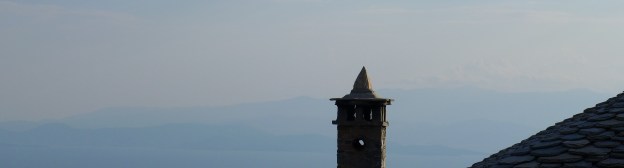
Perhaps not as well-known is the annual “Music Village” event which takes place every August in Agios Lavrentios, a small village situated at an altitude of 600 metres on Pelion’s southern slopes. A place that seems untouched by the passing of time, Agios Lavrentios captivates you instantly with its traditional Pelian architecture, intricate web of cobblestone alleys, and fascinating vistas of the surrounding landscape.

Moreover, thanks to its natural location and the total absence of motor vehicles, it is marked by a special ambience of serenity that invites you to wind down and enjoy the overflowing tranquility. Until the festivities begin, that is.

The music

This year marked the 10th consecutive edition of the Music Village, adding a festive flavor to the event’s already celebratory and Dionysian nature. A combination of daily workshops, organized events and performances, as well as spontaneous jams and all sorts of music-related happenings, the festival takes on a dynamic character that transforms the whole village into a vivid, pulsating arena of continuous artistic activity.

This slideshow requires JavaScript.

Throughout the two periods of the Music Village, the various instructors, students, visitors and even village residents all participate in a prolonged musical feast, where learning from one another and enjoying music all together becomes a daily routine.

Every morning I would walk down to the central square of Agios Lavrentios, where the sound of violins in unison would slowly wake me up over a cup of coffee. After tuning in to the village sounds (the murmuring of purling water, a clarinet playing from inside a nearby building), I would move towards the court of St. Athanasios Church (dating from 1777) where our instructor and master percussionist Kostas Anastasiadis would talk to us about the harmony of rhythm.

The rhythm of nature

Listening to Kostas and learning from such a great musician was a privilege: over a period of just a few days, he was able to initiate us into the world of Indian polyrhythmic techniques (some of the new words I learned include tihai and chakradhar), analyze complicated rhythmic patterns and show us how to best tackle them, and -perhaps most importantly- share some of his insights into the philosophy of music and how to become a better musician not by mindless practicing but by listening to the others and help them sound and perform better. For music is not just notes on paper, but the interaction between players, the spontaneous response of the performer to the stimuli he receives from his bandmates and the audience.

Finally, I shall never forget how he kept time to the singing of the nightingale, thus demonstrating that nature is really the most perfect metronome of them all. Machines, after all, are only around for a few hundred years, while nature has been singing long before man started to imitate her…

Vivaldi, jazz and the Greek summer

It is common to associate certain songs, albums or artists with the occasion and the place where we first listened to them. This is especially true when the first hearing is linked to a place of exceptional beauty, which stays forever intertwined with the tune/artist in question.

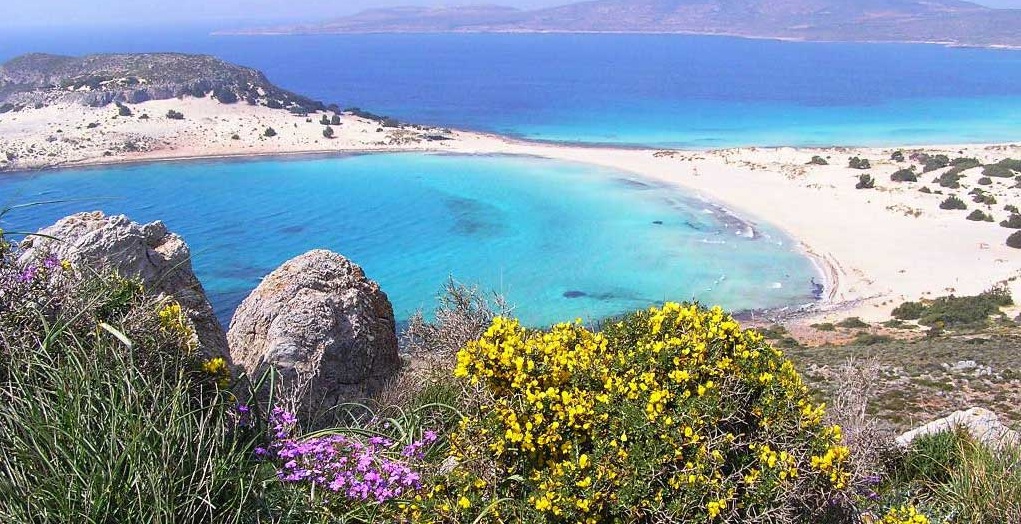
I have such a memory from some distant summer holidays in the small island of Elafonisos, just off the Southern coast of Peloponnese in Greece. Known for its sandy beaches and blue-green waters, Elafonisos is an ideal place to wind down and tune in your body and soul with the beautiful, serene scenery.

Elafonisos, Greece

Every day we would walk up to a small beach bar for a snack, casual talk and enjoy the splendid surroundings. To top it all off, there was almost always some intriguing music coming from the bar’s speakers that seemed to blend perfectly with the surrounding space.

One time, while I was enjoying the most delicious karydópita (pecan pie) with fresh vanilla ice cream I have ever tasted, I decided to walk up and ask the bartender/cook/DJ what was the tune we were listening to.

I could tell it was some sort of jazz adaptation of Vivaldi, but I had never heard something like it before. He wrote down the name of the artist on a piece of paper and handed over to me (back then there was no mobile phones, let alone Wi-Fi). The note read Jacques Loussier”.

That’s how I was introduced to the wonderful world of the Jacques Loussier Trio and their magnificent renditions of classical music (from Bach and Vivaldi to Chopin and Debussy).

To this day, when I listen to Vivaldi’s ‘Four Seasons’ played by Loussier’s jazzy piano trio, my mind flies instantly toward the Greek summer – the most beautiful season of all.

How a -great- record taught me an important life lesson

I first listened to it some years ago, not exactly sure when or where anymore. But I fell in love with it instantly, from the first hearing. I knew immediately that this was a record I could listen to again and again, without ever getting tired of it.

And so it happened. To this day, Keith Jarrett’s The Köln Concert remains one my favorite albums; not just as far as jazz is concerned, but from any music genre.  What I didn’t know until recently is the fascinating story behind the making of this remarkable record.

Jarrett had originally requested a Bösendorfer 290 Imperial concert grand piano for his performance at Cologne’s Opera House. However, when he arrived at the venue (tired from not sleeping well in several nights and in pain from back problems), he was in for a surprise: due to some confusion by the opera house staff a different, much smaller baby grand piano was waiting for him instead.

Although the instrument was in quite poor condition (thin in the upper registers, weak in the bass register, the pedals not working properly), Jarrett eventually decided to go on with the concert. And in spite -or rather, because- of the adverse circumstances, he delivered an inspiring performance that later went on to become the best selling piano album of all times.

Köln was different because there was just so many negative things in a row”

Keith Jarrett

As producer Manfred Eicher, who recorded the performance, has commented on Jarrett’s magnificent playing: “Probably he played it the way it sounds now because it was not a good piano. Because he could not fall in love with the instrument, he found another way to get the most out of it.”

I think the way Jarrett managed to create something so beautiful under such unlikely circumstances can be seen as a valuable lesson – not just for pianists, jazz musicians or improvisers but for all of us. No matter how hard or unfavorable the conditions, one can always manage to make the best out of a situation. And, furthermore, even excel exactly because of the obstacles presented to him or her.

Something to ponder on next time you happen to listen to Jarrett’s inspired and seemingly effortless improvisation…