Author Archives: The Muser

Great moments of Greek(lish) rock, pt.3: Drunken Socrates

Socrates Drank the Conium were undoubtedly the most important exponents of the Greek rock scene throughout the 1970s and up to the early 1980s. Their name has attained a somewhat legendary status and commands considerable respect among Greek rock fans and critics up to this day.

Although the name ‘Socrates Drank the Conium’ first appeared in 1969, the story of the band goes back to the time when fellow high-school students Antonis Tourkogiorgis and Yiannis Spathas formed The Persons. The impeccable synchronization and exemplary blending of Spathas’s guitar playing with Tourkogiorgis’s distinctive use of bass was evident from early on, as was the potential for the remarkable compositions that were about to emerge.

Socrates Drank the Conium (1972)

After releasing three singles and making several live appearances as Persons, they changed their name to Socrates Drank the Conium (or simply Socrates, as friends and fans would end up calling them) and made their recording debut (Socrates Drank the Conium, 1972) as a trio, with Elias Boukouvalas behind the drums. The album is characterized by an explosive mix of blues, heavy rock and psychedelic elements much akin to the sound of bands like The Jimi Hendrix Experience and Cream. Apart from such obvious influences, other artists that had a significant impact on Socrates included Ten Years After, Fleetwood Mac, John Mayal, Free and Led Zeppelin. Despite the rather poor production and the unhelpful recording conditions, which also concern their next album (Taste of Conium, 1972), Socrates’ powerful message got through and resulted in a warm reception from both Greek public and press of the time.

The band’s biggest asset was undeniably the astonishing technique of guitarist John Spathas whose virtuosity and musicality produced results of exceptional power and expressiveness when combined with the band’s rock-solid rhythm session. In addition, the frequent incorporation of traditional Greek elements in Spathas’s guitar passages and solos would also become one of the band’s trademarks and most significant innovations.

The introduction of Live in the Country – the very first song in Socrates’ recording career – is a brilliant demonstration of Spathas’s skillful guitar playing and highly idiomatic musical language, which arises from a combination of a Hendrix-like sound and elements of Greek folk music.

SocratesBy the time their third album (On the Wings, 1973) hit the shelves, Socrates had already attained a preeminent place amongst contemporary Greek bands. Having played at most of the major venues in Greece but also elsewhere in Europe (including club Paradiso in Amsterdam), Socrates became known for the forcefulness and electrifying atmosphere of their live performances.

The creative course of Socrates culminated in the mid-1970s, when their collaboration with keyboardist and composer Vangelis Papathanassiou (who had also been a member of Aphrodite’s Child) led to the release of Phos (1976). Vangelis’s touch gave the band a more lyrical and elegiac sound that is clearly distinguishable throughout the album. Recorded in London, Phos (“light” in Greek) stands out as the crowning achievement of not just the band, but the entire Greek progressive rock scene of the era.

The album contains pieces of profound beauty such as Queen of the Universe, as well as a popular rendition of Starvation, which had appeared on the band’s debut album. The indisputable highlight, however, is Mountains (which would be re-recorded again in 1980), where Spathas embarks on an improvisatory trip of monumental scale, showcasing his exceptional guitar technique and unique assimilation of Greek folk musical idioms.

In the early 1980s, Socrates returned with two more noteworthy attempts (Waiting for Something and Breaking Through) and a couple of years later the band released its swan song (Plaza, 1983), having a last shot at international fame. Just before the turn of the millennium Socrates came together for  a series of concerts which resulted in the release of their live album Live in Concert ’99, a record that effectively summarizes their long and remarkable career.

Great moments of Greek(lish) rock, pt.2: Reflections of Genius

Manos Hadjidakis (1925 – 1994) was arguably the greatest Greek composer of the past century. Spanning across 5 decades, his voluminous creative output touches upon many diverse genres and styles, always characterized by a high degree of originality, sensitivity and expressiveness.

Greek composer Manos Hadjidakis (1925 – 1994)

Hadjidakis achieved international fame with his Never on Sunday, which won the Academy Award for Best Original Song in 1960 (a first for a foreign-language picture). The song has been covered in various languages ever since (from Yiddish to Cantonese) and its popularity does not seem to be waning, as testified by more recent versions such as the one by Pink Martini.

While in New York City, where he was living since 1966, Hadjidakis recorded Reflections together with the New York Rock & Roll Ensemble. Featuring English lyrics written by the band and Hadjidakis’s highly personal and emotional melodic lines, the result was an unprecedented fusion of classical, pop, rock, and traditional Greek music.

Released in 1970, the album contains some of Hadjidakis’s most captivating music. The elaborate orchestrations, ethereal melodies and gracefulness of the tunes have raised Reflections to a unique place among the composer’s oeuvre.

A rare musical marriage of seemingly disparate elements, the music of Reflections is characterized by hauntingly beautiful and melancholic overtones, that create a distinctive atmosphere of intimacy and warmth between the work and the listener.

The album’s popularity has always remained high and in 1993 it was re-recorded with Greek lyrics written by Nikos Gatsos, with Aliki Kayaloglou on vocals. More recently, the acclaimed Greek band Raining Pleasure released its own interpretation of the work, reaffirming its status as a timeless classic of Greek art music.

Great moments of Greek(lish) rock, pt.1: The Psychedelic Apocalypse

Here is wisdom. Let him who has understanding calculate the number of the beast, for it is the number of a man: His number is 666.

(Rev. 13:18)

Although 60s-70s Greek rock music was of no particular interest to the international public (not least because of obvious linguistic reasons), there were however some notable exceptions. Perhaps the most well-known Greek English-singing band of the era is Aphrodite’s Child (named after a song by Dick Campbell), formed in 1967 by Vangelis Papathanassiou (keyboards), Demis Roussos (bass guitar and vocals), Loukas Sideras (drums and vocals), and Anargyros “Silver” Koulouris (guitar).

Their first single Rain and Tears (1968), an adaptation of Pachelbel’s famous Canon in D, was recorded while the band was based in France. It met with considerable international success and went on to sell more than one million copies.

The band’s undisputed masterpiece, however, would be 666 (The Apocalypse of John, 13/18). Recorded between late 1970 and early 1971, 666 is considered a landmark in the history of progressive rock. An album of astonishing musical diversity, it was a powerful combination of original concept and highly innovative sound.

666 was largely Vangelis’s own musical project, as is testified by the advanced (for the time) use of synthesizers/keyboards, sound effects, and overall production. Musically, the album contains several remarkable moments (e.g. Aegean Sea, Break, The Four Horsemen), however it works best when seen as an uninterrupted, thematically-unified musical composition.

Aphrodite's Child: Best ofIts musical merits notwithstanding, the release of 666 was not unproblematic. The record company did not approve of the record’s length and largely experimental style, to say nothing about its subject matter. To top it off, the track “∞” featured Greek actress Irene Papas singing frantically “I was, I am, I am to come” in an aural simulation of female orgasm.

When the double album was eventually released in 1972 (one year after it had been completed), its blood-red cover (where the number 666 is prominently displayed) would also stir some controversy. This, however, only helped to boost the album’s sales, which exceeded 20 million copies worldwide.

Despite being the band’s greatest achievement, 666 would also be their swan song. Relationships between band members grew increasingly worse during the album’s recording, and by the time the record was out Aphrodite’s Child had already split. Both Roussos and Vangelis would follow successful solo careers, the latter achieving worldwide fame as a composer of electronic music (including the soundtracks for Blade Runner and Chariots of Fire).

Even though the children of Aphrodite had chosen to go their separate ways, they had managed to give birth (albeit a troubled one) to their psychedelic masterpiece – an everlasting monument of Greek rock music and one of the defining albums of the 70s progressive and experimental scenes.

125 years of sublime sound

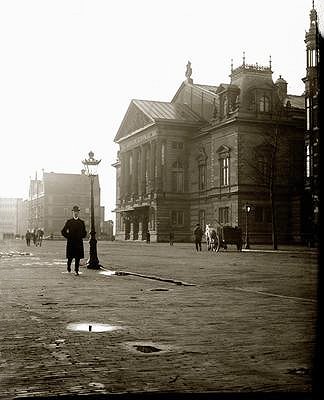
On April 11, 1888 an orchestra of 120 musicians together with a chorus of 500 singers performed works of Wagner, Handel, Bach, and Beethoven in a new building in what was then called Nieuwer-Amstel. It was the beginning of the story of the Concertgebouw, Amsterdam’s famous and much beloved concert hall. And no doubt it’s been a long, fascinating story…

This year, the city’s oldest and grandest classical music venue celebrates its 125th birthday. Due to its remarkable acoustics, the Concertgebouw is considered one of the finest concert halls worldwide – and for good reason. Anyone who’s been fortunate enough to attend a concert in the magnificent Grote Zaal (‘Big Hall’) is familiar with the unique aura and enchanting atmosphere of the venue.

The Concertgebouw in 1902

The Concertgebouw in 1902

Throughout its long -and at times turbulent- history, the Concertgebouw has been host to an astonishing string of world-renowned composers who came along to present premieres of their works, such as Gustav Mahler, Sergei Prokofiev, Richard Strauss, Maurice Ravel and Béla Bartók.

But by no means is the list confined to the classical genre alone. Legendary figures from the world of popular music have also performed in Amsterdam’s historic venue. Duke Ellington, Aretha Franklin, Ella Fitzgerald, Shirley Bassey have all been guests of the Concertgebouw, along with rock giants such as Led Zeppelin and Pink Floyd.

Personally, I always regard a visit to the Concertgebouw as a kind of pilgrimage to one of the world’s unique music temples. Along with Vienna’s Musikverein or London’s Royal Albert Hall, it ranks as one of the most beautiful concert halls I have ever visited. But more importantly, it is a place where music can be experienced most fully and intensely, and thus I think the word ‘temple’ should not ring too much out of place.

In all my years in Amsterdam, I’ve had the chance to see some truly amazing performances at the Concertgebouw. I was there for a solo piano recital by Daniel Barenboim for the celebration of Chopin’s bicentennial. I saw Earl Wild performing shortly after his ninetieth birthday, attended recitals by some of the world’s greatest pianists (Evgeny Kissin, Alfred Brendel and Grigory Sokolov to name a few) and saw celebrities like Chick Corea, Yo-Yo Ma and Lang Lang showcasing their extraordinary skills and virtuosity on stage.

One of the most-visited concert halls worldwide, the Concertgebouw seems to have not only a glorious past but also a promising future. And I look forward to being part of the experiences it yet has to offer.

Films from the underground: A conversation with Jeffrey Babcock (pt.2)

-click here to read pt.1-

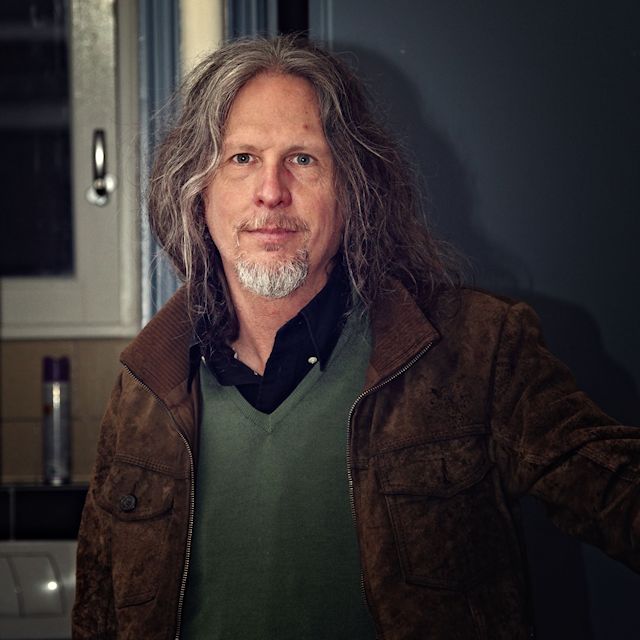
Jeffrey Babcok Photo: Mony Art http://www.monyart.com

Jeffrey Babcock
Photo: Mony Art http://www.monyart.com

The social factor and people getting together from different backgrounds is an important element in your screenings. But how is watching a movie different than reading a book or listening to a record, which can also be a very personal experience?

I feel the world is becoming too fragmented, we are becoming more and more isolated. People nowadays even have jobs that they can do from their computers staying at home. So everyone ends up staying in their little apartments with their home cinema or their flat-screen TV. And so we’re becoming more and more isolated, and desperately disconnected from each other.

So it really comes down to human interaction.

Everything I do, even cinemas and film, is not really just about film. I’m not a nerd in that sense. Films are only a step to reflect on our lives and what we are doing with our lives. If it doesn’t do that, then it becomes worthless to me. I’m not the kind of guy that downloads tons of movies just to have them all there. I think social interaction is necessary, more today than ever before, and that’s why cinema today is also necessary.

Watching a film together with other people makes it a living thing. You see a film with one audience and then with a different audience, and it can change incredibly according to how people react. I’ve shown movies that I’ve seen 25 times, and I’ll still be there with my audience watching the film. I would never abandon the audience and just go to the bar and grab a beer or something. I’m always there because it’s a live experience.

Do you also tend to watch the audience during a screening?

Yes, I do that sometimes. Like when you’re caught up in a movie and you suddenly step back and look at the audience, and you see all these beautiful faces transfixed on the screen…

Also, since many of my screenings are free, there’s a lot of people coming that normally would never go to watch a European art film. So then you get people that are used to acting in a certain way, because they’re used to going to Pathé to watch blockbusters and James Bond films, and they’re carrying over their behaviour from those cinemas because they don’t know any other way to relate to a movie. I see a lot of that going on but I regard it as a necessary evil, and it’s a good thing in a way. Because these people are the ones who need most to see such films, and otherwise they would never watch them.

If for example I’m showing a classic 1955 Italian film, there will be people who’ve never seen anything like it before and they will be surprised. And of course you’re likely to get some strange reactions, because they’re not used to respecting a movie, they’re only used to spectacles and blockbusters and treating movies like trash. My hope is that if these people come to the screenings frequently enough, they will then start to behave more respectfully. So I want them to come, so that there is diversity in the audience. I could choose to show film noir only, and then I would get a hardcore fan group and there would always be the same people, so the whole thing would be dead. So this is one way to keep things alive.

I always try to keep the movies at a very low price or for free. In my newsletter I also mention sometimes that if someone can’t afford to pay, they can come find me before the film and I’ll get them a ticket. I cannot necessarily let people in for free, because the places where we charge ticket also have to pay rent, so I don’t want to take money away from the cinemas either. Therefore I cannot just say “come in for free”, but I can pay for their ticket instead. I think people should be free to experiment, and with my cinema you never know what you’re going to get yourself into. So you should not be paying an expensive ticket like you do for Pathé and all the big cinemas.

And looking at the ticket prices in most cinemas, it seems that going to the movies is becoming a kind of luxury.

Yes, and the end result of this is that if someone wants to watch a movie and cannot afford to go see it on the big screen, they will download it and watch it at home by themselves. Once again, this is pushing people back into their private experiences, whereas what I’m trying to do is open people up into the social experience. And of course not everyone in Amsterdam can fit in my screenings, but there could be fifty small cinemas throughout the city doing the same thing, offering an incredible diversity of choice and being dirt cheap too.

At the same time, distributors currently couldn’t care less if a film is commercial or uncommercial; they will always ask the same standard price, which has led to a ridiculous situation. I see Amsterdam as an international city, and I think we should have an international cinema. It doesn’t have to be a big organization; anyone can basically turn any bar or space into a cinema and start their own initiative.

Is there a specific film or director of particular importance to you personally?

Not really. I mean, in general I am so open and I love diversity so much that I can’t get locked on to certain films or directors. The first movie I remember seeing is ‘The Hunchback of Notre Dame’ with Charles Laughton. I remember seeing this as a kid and I wasn’t supposed to stay up that late, so I sneaked out my bedroom door and I was watching this and it was fantastic: Esmeralda, Quasimodo, him on the top of the Notre Dame… And this reminds me that it can be a special experience when you have to struggle a bit or overcome some kind of obstacle in order to watch a film. It is the same thing, in a way, with some of my cinemas; not all of them are necessarily very comfortable.

And then there was Godard’s ‘Weekend’, a film he made in 1967. It’s a film I watched as a teenager when I was going to high school in a small town. On the weekends, and sometimes even during the week, we would go to the capital city (Madison, Wisconsin) and there were these students in a campus showing all these European films – because in America you don’t get to see European films. It was there that I saw my first Antonioni, my first Truffaut and John Cassavetes… So I was learning about cinema and when I would go back to my high school I would try and talk to other kids about it, but they only knew ‘Saturday Night Fever’ or ‘Star Wars’, there was such a divide going on…

So I also watched Godard’s ‘Weekend’ during that period and I was a young kid. And I was so pissed off after that movie, I was thinking “how could that fucker do that?”, you know, “how could anybody be so arrogant?” I was really upset about this film. But then, exactly because I was so upset about it, it got stuck in the back of my mind, I didn’t forget about it. And this changed slowly, and I started appreciating the movie and understanding where the film was coming from. So regardless of whether someone really hates or likes a film, I think it’s very important when it invokes a strong reaction. Because the kind of neutral mentality “seen the movie, had my pop corn, now go home” never has the possibility of changing a person’s life.

Are you thinking of including more titles by female directors in the future?

I think the ratio of female directors to male directors is good, in relationship to what’s available. Because how many films by female filmmakers are available? It’s a very difficult thing. I’m a real pusher of people like Lina Wertmüller for instance. Nobody else shows her films anymore, and I’m the only one that keeps pushing people to see her films. So I had a screening of ‘Love and Anarchy’ (1973) one month ago, and people were totally amazed.

What is your favourite cinema in Amsterdam?

My favourite cinema? I don’t know. I love the cinemas where I’m having my screenings because they’re all so unique and special. But I’m also supportive of places like Kriterion or Studio K. Kriterion was started from people who were in the underground resistance in World War II. And then it transformed into a student-run cinema. So the people involved can only work there as students, and they get money from a gas station on a highway outside Amsterdam. That means they can afford to do uncommercial things and take risks, and they’re willing to do that.