British guitarist and songwriter Richard Thompson started his long recording career in 1967 as a member of Fairport Convention. His exceptional guitar technique and songwriting skills soon earned him a highly acclaimed status among peer folk-rock musicians, and many of his songs have been subsequently covered by a wide range of artists (including Elvis Costello and David Gilmour).
Mostly known for his skilled acoustic playing, Thompson has deployed several styles over the years. He often plays bass notes using a pick between his thumb and first finger, adding the melody and extra ornamentation by plucking the treble strings with the rest of his fingers. Sometimes he also makes use of a thumb-pick, as in the motorcycle ballad 1952 Vincent Black Lightning.
A ‘folky’ power trio
His latest album Electric was released earlier this year, peaking at number 16 on the UK Album Chart (the highest charting album of his career so far). I recently had the chance to see Thompson perform live with his “electric trio” in Amsterdam, in one of the stops of his ongoing tour on both sides of the Atlantic.
It was interesting to watch such a revered acoustic player going electric, trying to emulate the sound of good old power trios like Cream or The Jimi Hendrix Experience. Towards the closing of the concert, however, Thompson made this telling confession: “You know, we are too folky to be a real power trio.”
With that, he grabbed his acoustic guitar and offered the audience a couple of excellent acoustic solo performances. He came back with his trio for a final tune: a magnificent, electrifying version of Hey Joe à laHendrix.
Whether folky, acoustic, or electric, one thing about Richard Thompson is certain: He surely remains a guitar powerhouse and a great inspiration for players worldwide.
“The sixties began in the summer of 1956, ended in October of 1973 and peaked just before dawn on 1 July, 1967 during a set by Tomorrow at the UFO Club in London.”
For anyone interested in the cultural and music developments of the 1960s, Joe Boyd’s fascinating memoir White Bicycles – Making Music in the 1960s is a must read (the book title refers to the 1967 song My White Bicycle by Tomorrow, which was about Amsterdam’s community bicycle program). Full of incredible anecdotes as well as precious insights, it highlights less-known aspects of the 1960s music business and its protagonists.
Boyd was a key figure himself. As a tour manager he organized concerts for artists like Muddy Waters, Stan Getz and Sister Rosetta Tharpe. He was also responsible for the sound at the 1965 Newport Folk Festival, when Bob Dylan confronted the audience with his controversial electric set. Furthermore, he went on to become a successful record producer, working with bands such as Fairport Convention and Pink Floyd.
From blues to folk and beyond
In his book, Boyd describes the blues boom of the sixties and its increasing appeal to white audiences, which marked “the end of the natural life of the form.” As he puts it: “No white person in America in 1964 – with the exception of me and my friends, of course – knew who John Lee Hooker was.”
He goes on to chronicle landmark events such as the Newport Festivals between 1963 and 1965, which saw the rise of Bob Dylan as Woody Guthrie’s heir and his subsequent turn from political song to a “decadent, self-absorbed, brilliant internal life.” Boyd is even willing to provide the exact time slot of this major shift: “Anyone wishing to portray the history of the sixties as a journey from idealism to hedonism could place the hinge at around 9:30 on the night of 25 July, 1965.”
Revolution and disillusionment
Moving on to the cultural scene amidst swinging London, Boyd recalls: “In 1966 the world was changing by the week. (…) Soho that year was like the steppes in AD350, with Visigoths, Ostrogoths, Vandals and Huns queuing up to pillage, destabilize and eventually take over the Roman Empire.” There is no doubt for the prominent role of the English capital: “New York would never have moulded Hendrix’s genius into as powerful a pop persona as London did.”
Boyd describes the music of the early Pink Floyd as “the soundtrack for the Underground” and likens the choruses of Syd Barrett’s songs to“fertile planets in a void of spaced-out improvisation.” For him, one of the most enduring images of the whole era was that of “the four Floyds bent together over their instruments in concentration while purple and turquoise bubbles of light play over them.”
As for the unprecedented commercial success that followed in the post-Barrett era: “Pink Floyd’s success is difficult to analyse or explain. What they brought with them from Cambridge was all their own; London in 1967 just happened to fall in love with it first.”
Parallel to the music-driven narrative in White Bicycles, Boyd also illustrates vividly the optimism, idealism and progressive tendencies of the time: “Despite differing notions of what the revolution was about, an atmosphere of agape was pervasive in 1967: people were fundamentally quite nice to each other. (…) What London witnessed in the spring of ’67 was more than an endorsement of a new musical style, it was a mass immersion in the sub-culture that gave rise to it.”
Interestingly, he is also careful to demonstrate the other, darker side of this eventful period: “Beneath the surface, the progressive sixties hid all manner of unpleasantness: sexism, reaction, racism and factionalism. (…) The agape spirit of ’67 evaporated in the heat of ugly drugs, violence, commercialism and police pressure. In Amsterdam, people started sealing and repainting the white bicycles.”
In conclusion, Boyd’s White Bicycles makes for some fascinating reading. Next to the impressive parade of (more or less) famous musicians featured in its pages, the author also refers in passing to a variety of topics from Cuban music to the downsides of digital recording. Personally, I found extremely valuable the abundance of references to artists and recordings I had never heard of before, and enjoyed greatly reading about the background stories to some of the best music ever made (as in the chapters on Nick Drake, which are particularly rewarding).
Two necessary components of any enjoyable evening at the concert hall are: a) good company, and b) great music. Both were in place last night at club Paradiso, where I had the good luck to enjoy the wonderfully weird art of Venezuelan American singer-songwriter Devendra Banhart.
A small revelation for me was the opening act: Brazilian guitarist, singer and songwriter Rodrigo Amarante. His soft playing on the guitar accompanied perfectly his mellow, soothing voice. Meanwhile, his tunes produced a mesmerizing effect, making for an excellent opening to Banhart’s own entry to the stage.
And then, a pleasant surprise! Rodrigo comes back on stage, this time as a member of Devendra’s backing band. Having met back in 2006 at Tim Festival in Rio de Janeiro, the two artists had also collaborated in the song Rosa from Devendra’s album Smokey Rolls Down Thunder Canyon.
Banhart live!
Surrounded by a few more excellent musicians, Banhart performed songs from his latest album Mala as well as older tunes, including a long magnificent rendition of Seahorse. The show closed with Carmensita, probably Banhart’s most widely recognized tune, causing a slight frenzy among the crowd.
Seeing Devendra Banhart live was a gratifying experience, especially as I wasn’t quite sure what to expect. His unique singing style, self-mockery and quasi-improvised choreography on stage was a perfect match to his delightful tunes and bittersweet lyrics. His hair may not be as long and his outfits not as extravagant, yet Banhart surely knows how to put up a great show.
Devendra Banhart @ Paradiso, Amsterdam (11 July 2013)
Devendra Banhart @ Paradiso, Amsterdam (11 July 2013)
Devendra Banhart @ Paradiso, Amsterdam (11 July 2013)
Devendra Banhart @ Paradiso, Amsterdam (11 July 2013)
Devendra Banhart @ Paradiso, Amsterdam (11 July 2013)
Devendra Banhart @ Paradiso, Amsterdam (11 July 2013)
Rodrigo Amarante @ Paradiso, Amsterdam (11 July 2013)
American singer-songwriter Charlyn Marie Marshall (born January 21, 1972), better known by her stage name Cat Power, was originally discovered in 1994 by Steve Shelley of Sonic Youth. After a hiatus around the turn of the millennium, she reemerged with her soul-inspired, award-winning album The Greatest (2006), which was recorded with a rhythm band comprised of Memphis studio musicians.
Her latest album Sun (2012) was the first one since The Greatest to feature solely original material. It received mostly positive reviews and was in many ways a venture of cathartic nature for Cat Power, who had been facing alcohol-related problems and mental health issues in the past.
Live at Club Paradiso, Amsterdam
Before going to watch Cat Power at Paradiso earlier this week, I knew that her live performances had a reputation for being quite unpredictable (she had abruptly cut short some of her shows in the past due to drinking problems or stage fright). Thankfully, none of this took place this time around. Charlyn and her band went on to deliver a perfectly professional show, playing a total of approximately 90 minutes.
Still, a fragility in her voice and body language made it clear that this is someone who has been through rough times. And perhaps it’s precisely this hard-won maturity that has infused new meaning into her lyrics, while making her soothing voice sound even more attractive.
As was the case with one of the evening’s most captivating moments, when the lights went dim and the entire hall fell silent as she sang:
“Everything you have to go through
With a smile on your face
Everything we now know, with a smile on our face
I, I can never forget”
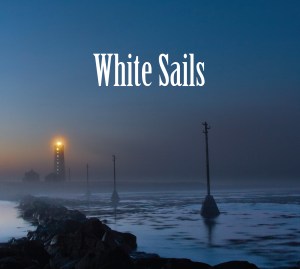
White Sails is the project that sprang from the collaboration between singer Leigh Gregory (ex-Mellow Drunk) and multi-instrumentalist Ville Vilpponen (ex-Dora Flood, The Bias), along with Ville’s brother Jaakko on drums.
The three met in San Fransisco, but as Ville and Jaakko moved back to Helsinki during the summer of 2012, White Sails became a bi-continental endeavor.
Their self-titled debut album, which was released earlier this year by Ruska Records, is characterized by slow-paced tunes where the atmospheric music blends smoothly with the thick, suggestive vocal lines. Firmly rooted in the ’70s classic/prog-rock tradition, the album still manages to sound refreshingly modern.
New White Sails EP
A new EP by White Sails is scheduled to be released in August by Fruits de Mer Records, including new material along with two covers of the early Black Sabbath instrumentals ‘Laguna Sunrise’ and ‘Fluff’. Listening again to these forgotten gems played with a brand new, polished sound is a real treat and a perfect complement to Sabbath’s own spectacular comeback earlier this summer.





 In his book, Boyd describes the blues boom of the sixties and its increasing appeal to white audiences, which marked “the end of the natural life of the form.” As he puts it: “No white person in America in 1964 – with the exception of me and my friends, of course – knew who John Lee Hooker was.”



 The Muser