I was always fascinated by stories of music prodigies: Mozart composing already at the age of five, 10-year-old Camille Saint-Saëns offering to play any of Beethoven’s 32 piano sonatas from memory as an encore at his debut public recital, or Hungarian virtuoso Georges Cziffra entering the Franz Liszt Academy at age nine, after four years performing in a traveling circus.
Several instances of young children displaying extraordinary musical talent have been recorded in recent times. Among them one can find famous performers such as Martha Argerich, Glenn Gould, and Yehudi Menuhin, to name but a few.
The Canadian Mozart
However, the list also includes many less-known musicians whose early promising careers did not always match the expectations of their patrons and audience once they reached adulthood. One such case was Canadian pianist and composer André Mathieu (1929 – 1968). While still 7 years old, Mathieu gave a recital of his own works in Paris. His performance was received enthusiastically and critics unanimously hailed him as “Canadien Mozart”.
However, the aftermath of WWII found Mathieu a changed man and his return to Montreal was followed by alcoholism and emotional problems that led to his premature death at the age of 39. Mathieu’s life story is explored in the film L’enfant prodige (2010) by Luc Dionne, which features much of his beautiful music performed by -also Québécois- pianist Alain Lefèvre.
Rise and fall (and rise again)
L’enfant prodige bears a close resemblance to the film Shine (1996) by Scott Hicks, which deals with the formative years of Australian concert pianist David Helfgott and his subsequent struggle with mental illness. Both films explore similar themes such as the beginnings of a promising music career, the strong influence of family on the child’s character, and the early claim to fame followed by a sudden fall.
There is, however, a crucial difference. While L’enfant prodige is the tragic story of one’s descent to alcoholism and despair, Shine is essentially a film about overcoming seemingly unsurpassable obstacles and surviving life’s misfortunes.
A great challenge even for the most phenomenal talents, no doubt.
I recently had the chance to watch Cría Cuervos (‘Raise Ravens’), a 1976 drama film by Spanish director Carlos Saura. The film, which won the Special Jury Prize Award at the 1976 Cannes Film Festival, was shot as Spanish dictator Francisco Franco was lying on his deathbed. While it deals with themes like childhood and loss, one can also find subtle allusions to the contemporary political situation and the changes Spanish society was undergoing at the time.
Cría Cuervos left quite a strong impression on me. As the story unfolds Saura manages to create a miniature, fragile universe of emotional intensity and introspective -almost claustrophobic- atmosphere (most of the film is shot inside a single house).
In the center of this universe lies Ana, the little girl protagonist, played by 8-year-old Ana Torrent whose performance is absolutely mesmerizing. Ana’s father (a general in the Spanish army), her mother and two sisters (together with the rest of the characters in the film) all seem to revolve around her, like planets in orbit that occasionally draw nearer or get farther away from little Ana.
Jeanette meets Frederic Mompou
The film’s exemplary direction and great performances aside, I was also intrigued by its music. Jeanette’s pop song Porque te vas recurs throughout the movie, adding a bittersweet feeling to the film’s imagery.
What is more, the film’s main music theme is Cançó No.6 in E-flat minor by Catalan composer Frederic Mompou (1893 – 1987), a wonderfully melancholic and haunting piano piece. Originally dedicated to Arthur Rubinstein, it wasalso a favorite of celebrated Italian pianist Arturo Benedetti Michelangeli.
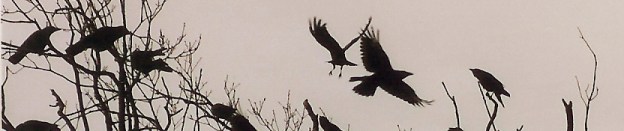
PS: The film’s title comes from the Spanish proverb Cría cuervos y te sacarán los ojos, which literally translates as: “Raise ravens, and they’ll take out your eyes”.
I was first introduced to the Nibelungenlied (‘The Song of the Nibelungs’) through Fritz Lang’s magnificent Die Nibelungen, a series of two silent fantasy films (I. Siegfried & II. Kriemhild’s Revenge). Based on an epic poem written around 1200 AD, the screenplay follows the story of dragon-slayer Siegfried, his murder by Burgundian warrior Hagen of Tronje, and finally the revenge of his wife Kriemhild.
Siegfried on horseback with Alberich, king of the dwarfs (still from Die Niebelungen by Fritz Lang)
Wagner’s famous opera cycle Der Ring des Nibelungen (‘The Ring of the Nibelung’) is also based, however loosely, on characters from the Nibelungenlied and the Norse sagas. Not long ago, I happened to come across a wonderful 2-volume edition of Wagner’s Ring with some exquisite illustrations by Arthur Rackham that date back to 1910-11.
‘Siegfried awakens Brünnhilde’, illustration by Arthur Rackham
Lang’s visual artistry and Rackham’s captivating images notwithstanding, the most remarkable and ambitious work of art related to the Ring and the myth of the Nibelungs by far remains Wagner’s monumental opera cycle itself. I have wanted to watch Wagner’s operas on stage for a long time, and the opportunity finally arose this year on the occasion of the composer’s bicentennial. So far, I’ve had the chance to watchSiegfried in Amsterdam’s Muziektheater, which also stages the Ring cycle in its entirety.
Wagner’s 200th birthday was celebrated through a series of events and festivities booth within and outside Germany. Meanwhile, the composer’s strong anti-Semitic views and later association with the Nazis have continued to spark controversy up to this day. Same goes for the staging of his works, as it was made apparent this year in Bayreuth. Powerful as Wagner’s music may be, it seems to carry with it such a heavy load of historical allusions and connotations it often becomes impossible to be freed thereof.
Hungarian composer Franz Liszt (1811 – 1886) was a key figure in the development of Western music. Mostly remembered today for his legendary virtuosity and his notoriously challenging piano pieces, he was also a prolific composer, a teacher and a conductor with profound influence on subsequent composers such as Hector Berlioz, Edvard Grieg and Richard Wagner (who also married Liszt’s daughter Cosima).
Perhaps one of his lesser-known works is his Missa Solemnis “Graner Mass”, composed for the occasion of the confirmation ceremony of the then still incomplete Basilica of Ezstergom (home to the Hungarian Archbishop in the Diocese of Gran) on August 31, 1856.
I was completely unaware of Liszt’s sacred choral music until I bumped into a relief on the wall of the Mozes en Aaronkerk church in Amsterdam some days ago. From its inscription I was informed that Franz Liszt attended a performance of his “Graner Mass” inside that very temple on April 29, 1866.
Mozes en Aaronkerk (Waterlooplein, Amsterdam)
It was a pleasant surprise, and one that led me to discover Liszt’s obscure Missa Solemnis. I had been in Waterlooplein countless times in the past to check the excellent outdoor flea market and browse through the various clothes, antiques or records, but had never paid attention to that small relief on the church wall right on the edge of the square. It always feels nice, and sometimes extremely rewarding, to be a tourist in your own city.



 Cría Cuervos left quite a strong impression on me. As the story unfolds Saura manages to create a miniature, fragile universe of emotional intensity and introspective -almost claustrophobic- atmosphere (most of the film is shot inside a single house).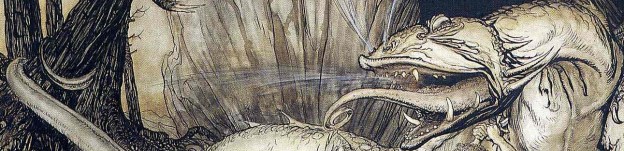




 The Muser